Hello Seventh Grade First Day School: A Practical Guide for Educators, Parents, and DIY Creators
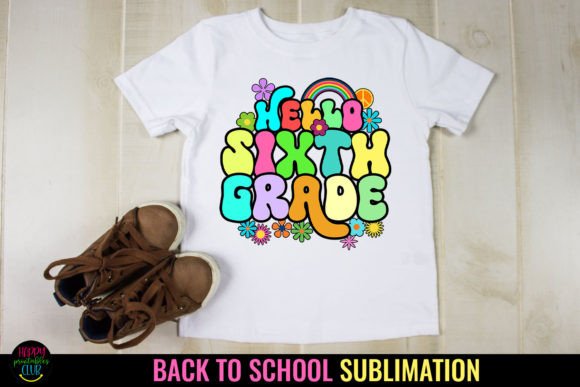
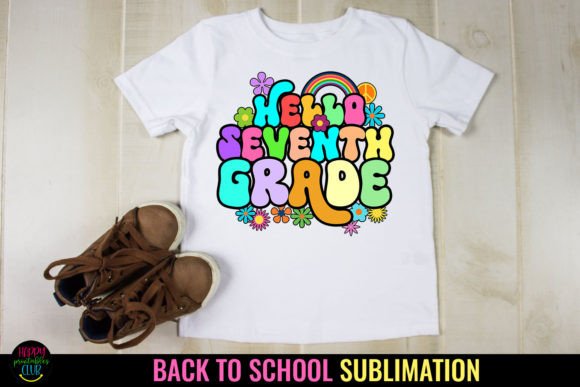
“Hello Seventh Grade First Day School” is a ready-to-use digital sublimation design tailored specifically for the emotional and symbolic milestone of entering seventh grade. Unlike generic “first day of school” graphics, this design carries subtle developmental nuance—acknowledging that seventh grade marks a meaningful transition from elementary routines to adolescent academic expectations. It’s not just celebratory; it’s context-aware. The phrase balances warmth (“Hello”) with clarity (“Seventh Grade”), avoiding infantilization while still honoring the significance of the occasion.
What You’re Actually Getting—and What That Means in Practice
The package delivers a single high-resolution PNG file (12 × 12 inches, 300 DPI) inside a ZIP folder. This isn’t layered PSD or vector-based AI/EPS—it’s a flattened raster image optimized for sublimation printing on light-colored polyester-blend fabrics and coated hard goods. That specificity matters: if you’re planning to print on cotton tees without a poly coating, or use the file for large-format vinyl cutting, this design won’t serve those needs without additional editing or conversion.
The resolution supports crisp output on common merchandise—including t-shirts, tumblers, mugs, tote bags, journals, and invitations—but only when applied correctly. For example, a 12 × 12-inch PNG at 300 DPI translates well to an 11 × 14-inch print area on a ceramic mug or a centered chest graphic on a youth medium t-shirt. It’s less ideal for oversized banners or embroidery digitizing, where vector scalability or stitch-file preparation would be required.
How It Compares to Other First-Day Design Options
Many digital marketplaces offer “first day of school” assets, but they fall into three broad categories: age-agnostic templates, grade-specific editable text designs, and fully customized illustration packs. “Hello Seventh Grade First Day School” sits firmly in the second group—but with a key distinction: it’s pre-styled, not editable. The typography, spacing, and visual hierarchy are fixed. You can’t swap “Seventh” for “Eighth” or change the font color without photo-editing software.
This makes it faster to deploy than customizable Canva-style templates (which require user input), but less flexible than layered PSD files sold by some designers. If your goal is consistency across a class set—say, 30 matching water bottles for a homeroom—you’ll appreciate the uniformity. But if you’re creating personalized keepsakes for siblings across multiple grades, you’d need separate purchases or design adjustments.
Real-World Use Cases Where It Shines
Consider these practical scenarios:
- School spirit coordination: A PTA organizing a “Welcome to Middle School” event orders blank white t-shirts and applies the design via heat press. Because the PNG is centered and sized for standard apparel, alignment is predictable—even for volunteers with limited sublimation experience.
- Teacher welcome kits: An educator preparing individual student folders includes a printed version of the design on notebook covers and inserts it into custom-printed journals. The 300 DPI ensures legibility when shrunk to 4 × 4 inches for interior pages.
- Small-batch gifting: A parent making 5–10 items for their child’s friend group uses the same file across mugs, totes, and stainless steel tumblers. No reformatting needed—just adjust canvas size in their sublimation software to match each product’s printable area.
In all three cases, the value lies in reliability—not novelty. It doesn’t try to stand out through complex illustration or trendy motifs. Instead, it prioritizes clarity, age-appropriate tone, and technical readiness.
Limitations to Acknowledge Upfront
Because this is a digital download—not a physical product or service—its utility depends entirely on your existing setup. You’ll need:
- A compatible sublimation printer (or access to a local print shop that accepts PNGs)
- Sublimation-compatible blanks (e.g., polyester t-shirts, coated mugs, aluminum tumblers)
- Basic image-handling software (like Photoshop, GIMP, or even Canva Pro) to resize or position the file if needed
There’s no software support included, nor troubleshooting for color shifts during transfer. And yes—color variation across devices is real. The design may appear warmer on one monitor and cooler on another, and final print results depend on ink calibration, substrate quality, and press time/temperature. That’s not a flaw in the file; it’s inherent to the sublimation process itself.
When Another Option Might Be a Better Fit
This design works best when your priority is speed, thematic relevance, and straightforward execution. It’s less suitable if you need:
- Adaptability across grade levels: If you regularly create materials for grades 6–8, a customizable template with editable text layers may save more time long-term—even if it requires a few extra minutes per project.
- Accessibility considerations: The current PNG lacks alt-text, scalable vectors for screen readers, or high-contrast variants. For school communications intended for diverse learners, a designer might need to rebuild elements from scratch using accessible fonts and contrast ratios.
- Brand alignment: Schools with strict visual identity guidelines (e.g., mandated fonts, approved color palettes) may find the fixed styling incompatible without significant redesign work.
Similarly, if you’re sourcing for resale—especially on platforms like Etsy or Amazon Merch—you’ll want to verify commercial licensing terms separately. While many sublimation designers permit small-batch physical resale, usage rights aren’t always bundled with the download and vary by seller.
Making a Thoughtful Choice
Choosing “Hello Seventh Grade First Day School” isn’t about finding the most elaborate option—it’s about matching the tool to your actual workflow, audience, and constraints. It excels when you know exactly what you’re printing, have the equipment ready, and value consistency over customization.
Compare it not just to other PNGs, but to your own capacity: Do you have time to edit? Do you need flexibility—or fidelity? Are you serving one student, a classroom, or a broader community? Those questions matter more than pixel count or file format alone.
For educators building welcoming environments, parents marking developmental milestones, or small-business owners fulfilling niche back-to-school demand, this design offers grounded utility—not flash. It meets a narrow need well, without overpromising. And in a landscape full of decorative distractions, that kind of focused usefulness is increasingly rare—and genuinely valuable.