Happy First Day: Design Freedom That Grows With Your Creative Needs
“Happy First Day” isn’t just a cheerful phrase—it’s a design philosophy rooted in intentionality, versatility, and real-world usability. At its core, the Happy First Day and Back to School T-shirt Design vector collection reflects a shift in how creators, educators, small business owners, and makers approach seasonal content. No longer are back-to-school visuals limited to generic clip art or low-resolution downloads. Today’s users expect precision, adaptability, and professional-grade assets—assets that work across mediums, scale with projects, and respect their time.
Why “Happy First Day” Fits Modern Creative Workflows
Back-to-school season has evolved from a retail calendar event into a multi-platform creative opportunity. Teachers personalize classroom materials. Parents craft custom first-day-of-school signs. Etsy sellers launch limited-run apparel drops. Local print shops fulfill school spirit orders for PTA groups. And freelance designers build branded kits for education-focused clients. Each of these roles demands assets that are technically sound *and* emotionally resonant—designs that feel warm, inclusive, and authentically celebratory.
The Happy First Day vector collection meets that need by prioritizing technical readiness without sacrificing expressive charm. Each piece is meticulously crafted—not as a one-off graphic, but as a modular, production-ready component. That means no pixelation when scaled to a 24" poster card, no color shifts when converted for vinyl cutting, and no rework needed when switching from navy T-shirts to pastel tote bags.
More Than T-Shirts: A Cross-Platform Asset Strategy
Today’s creative professionals rarely limit themselves to a single product type—and neither should their design resources. The Happy First Day files support this reality through intentional format diversity:
- EPS File: Industry-standard vector format for full scalability and editing in Adobe Illustrator or CorelDRAW—ideal for commercial printing or logo integration.
- PNG File: High-resolution, transparent-background raster version for quick social media posts, digital invitations, or web banners.
- PDF File: Print-optimized layout ready for immediate use on home printers or local print services—no software installation required.
- 100 Color-Changeable Version: Built-in swatch libraries let you adjust palettes in seconds—crucial when matching school colors, brand guidelines, or seasonal themes.
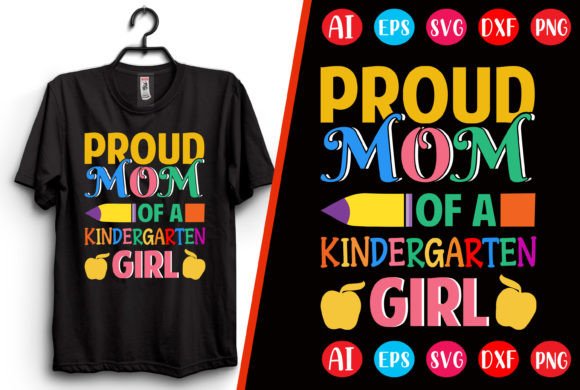
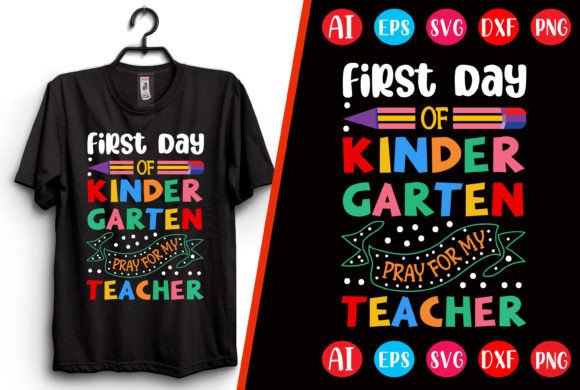
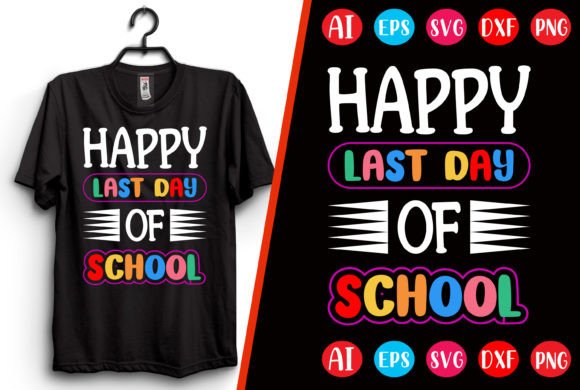
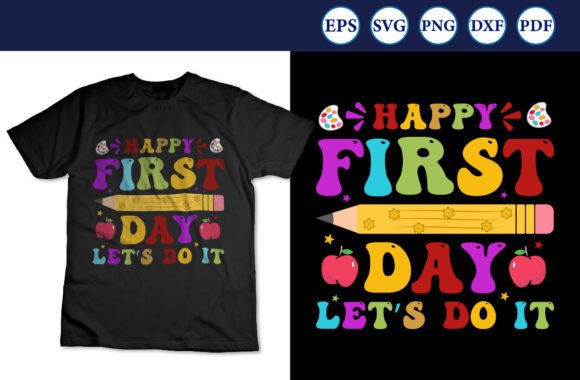
- Mockup Image (JPG): Realistic, well-lit preview showing how the design looks on a fitted unisex T-shirt—useful for client presentations or online store listings.
This isn’t about throwing every file type at the wall to see what sticks. It’s about anticipating where and how a creator will use the asset—and removing friction at each step.
From Classroom to Commerce: Practical Use Cases
Consider how a single Happy First Day vector might serve different users across contexts:
- A homeschool parent uses the PNG file to print a laminated “First Day of 3rd Grade!” sign—then repurposes the same design in a lighter shade for a matching notebook cover using the color-changeable version.
- An educator launching a new after-school program imports the EPS into Canva, layers it over a photo of students, and exports a PDF flyer for district-wide email distribution—all within 12 minutes.
- A boutique owner uploads the vector to their DTG (direct-to-garment) printer’s RIP software, adjusts the size for youth tees, and runs a batch of 50 shirts—then uses the same file to create matching enamel pins via a third-party manufacturer.
- A scrapbooker prints the design onto printable sticker paper, cuts it with a Cricut machine, and applies it to a handmade journal—leveraging the crisp vector edges for clean, precise cuts every time.
What ties these examples together isn’t just convenience—it’s consistency. The design retains its integrity whether viewed on screen, stitched onto fabric, or embossed onto a ceramic mug. That reliability builds trust—not just in the asset, but in the creator’s ability to deliver polished results.
Color, Context, and Creative Confidence
The “kaleidoscope of colors” referenced in the collection isn’t about overwhelming choice—it’s about contextual flexibility. Schools, districts, and families have distinct visual identities. Some lean into earthy, nature-inspired palettes; others embrace bold, high-contrast combinations. The 100-color option allows creators to align with those expectations without redesigning from scratch.
Equally important is the emotional tone. “Happy First Day” avoids cutesy tropes or dated motifs. Its clean lines, balanced composition, and subtle typographic warmth make it suitable for diverse age groups—from kindergarten orientation to college welcome week. That adaptability matters in an era where inclusivity isn’t optional—it’s expected.
Getting Started Without the Learning Curve
Time remains the most non-renewable resource for busy professionals. The decision to compress all files into a single, clearly labeled ZIP folder isn’t just logistical—it’s empathetic. There’s no hunting through nested folders, no deciphering cryptic filenames like “Design_v3_FINAL_2_revised.ai.” Instead, users find intuitive naming (“HappyFirstDay_Vector_EPS”, “HappyFirstDay_Mockup_JPG”), clear documentation (even if minimal), and zero dependencies on proprietary fonts or plugins.
This approach mirrors broader industry trends: tools and assets are increasingly judged not by feature count, but by how quickly they enable competent output. You don’t need to be a vector expert to use these files—but if you are, you’ll appreciate the layered structure, anchor points, and separation of text and icon elements.
Where This Fits in the Larger Creative Ecosystem
Digital design assets are no longer standalone purchases—they’re infrastructure. Just as developers rely on well-documented APIs or UI designers use consistent component libraries, creatives depend on reliable, interoperable files that integrate smoothly into existing tools and workflows. The Happy First Day collection reflects that maturity: it doesn’t ask users to change how they work; it adapts to them.
That mindset extends beyond back-to-school season. Once users experience how seamlessly these vectors translate across products—T-shirts, mugs, decals, posters, greeting cards—they begin thinking in terms of *systems*, not singles. A teacher who starts with a classroom banner may later create matching student name tags. A marketer who launches a back-to-school campaign may reuse the same visual language for fall enrollment emails or community event signage.
That continuity strengthens brand recognition, reduces repetitive labor, and ultimately supports sustainability—both creative and environmental. Printing one high-quality file multiple times beats generating five low-res alternatives that never quite fit.
Realistic Next Steps for Users
If you're evaluating whether this collection fits your needs, consider these grounded next steps:
- Check your current workflow bottlenecks. Do you spend more time resizing, recoloring, or troubleshooting file compatibility than designing?
- Map one upcoming project. Will you need physical prints? Digital shares? Multiple product types? Does the file set cover those paths?
- Test the mockup. Even if you don’t plan to sell apparel, does the JPG preview help you visualize placement, balance, and tone before committing time to production?
- Look beyond August. Can elements of the design—its typography, spacing, or iconography—inform other seasonal or milestone-themed work throughout the year?
“Happy First Day” works because it honors both the occasion and the effort behind it. It doesn’t promise overnight success or viral reach. Instead, it delivers quiet confidence—the kind that comes from knowing your tools are ready, your files are solid, and your creativity has room to breathe.