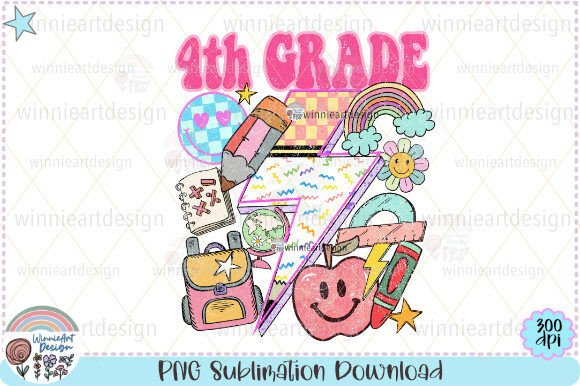
Fourth Grade Retro Teacher School PNG: A Practical Guide for Crafters and Educators
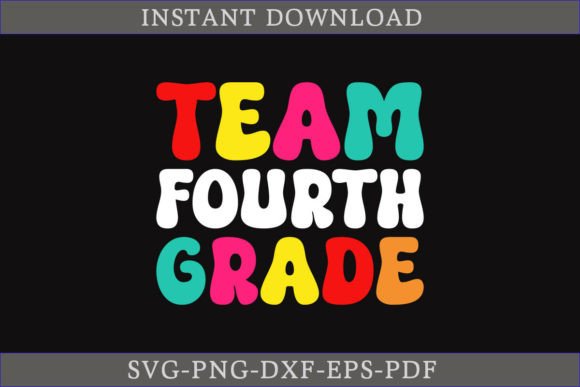
A Fourth Grade Retro Teacher School PNG is a high-resolution, transparent-background digital illustration designed with nostalgic classroom aesthetics—think chalkboards, vintage school desks, apple motifs, and mid-century typography. Unlike generic “back to school” graphics, this file centers specifically on fourth-grade themes, often featuring friendly teacher characters in retro attire (think cardigans, cat-eye glasses, and pencil skirts) alongside grade-appropriate symbols like multiplication charts, lined notebooks, and friendly robots or space-themed learning tools. The “PNG” designation means it’s raster-based—not vector—so scalability has practical limits, but its 4000 x 4800 pixel dimensions at 300 dpi make it exceptionally well-suited for print applications up to 13" x 16" without visible pixelation.
How It Differs From Other Back-to-School Digital Files
Many digital design resources labeled “back to school” fall into two broad categories: generic clipart bundles (often low-res, inconsistent style, or lacking thematic cohesion) and modern minimalist SVG files optimized for cutting machines. A Fourth Grade Retro Teacher School PNG occupies a distinct middle ground—it’s stylistically intentional, resolution-optimized for physical output, and tailored to a specific grade level rather than serving as a one-size-fits-all classroom graphic. That specificity matters: educators planning themed bulletin boards, parents creating personalized first-day-of-school signs, or small-batch crafters designing teacher appreciation gifts benefit from visual continuity that matches the developmental tone of fourth grade—neither too babyish nor overly mature.
Compared to SVG files, this PNG doesn’t scale infinitely—but unlike many free PNGs found online, it avoids jagged edges or compression artifacts thanks to its 300 dpi native resolution and clean transparency layer. Compared to JPEG versions, the absence of background color or blending allows seamless integration onto colored paper, fabric, or textured substrates. And unlike subscription-based design platforms where assets are licensed per use or require attribution, this is a one-time purchase with clear commercial allowances—as long as final products aren’t resold as standalone digital files.
Realistic Use Cases—and Where It Fits Best
The versatility outlined in the product description—card making, t-shirts, mugs, pillows, eco-bags—is grounded in practical application, but not all uses deliver equal results. For example:
- T-shirts and tote bags: Works well when printed via direct-to-garment (DTG) or quality screen printing. Because the design is large (4000 x 4800 px), it holds detail even when scaled down to an 8"–10" chest print. However, it’s not ideal for intricate embroidery digitizing—PNGs lack the path data needed for stitch mapping.
- Greeting cards and stationery: Excellent fit. The transparent background allows easy layering over patterned paper or watercolor textures in editing software like Photoshop or Affinity Designer. Just remember to resize before exporting—most home printers handle 8.5" x 11" layouts best at 2480 x 3508 px (300 dpi).
- Classroom décor (posters, door signs): Highly effective, especially when printed locally at a copy shop on matte or semi-gloss photo paper. The retro aesthetic resonates with both students and veteran teachers who appreciate subtle nods to educational history—without veering into kitsch.
- Digital-only use (social media, slides): Overkill in resolution. While functional, scaling down to web-safe sizes (e.g., 1200 x 1600 px) discards much of the file’s value. A lower-res version would serve this purpose more efficiently.
Key Tradeoffs to Consider Before Downloading
No digital asset is universally optimal—and understanding limitations helps avoid frustration later. First, this is a digital file only. There’s no physical item, no pre-printed sample, and no technical support for software-specific resizing. Users need basic familiarity with image-editing programs (even free ones like Photopea or GIMP) to adjust canvas size, crop, or convert color profiles. Second, while the file is watermark-free upon download, the seller’s preview includes visible watermarks—a standard protective measure, but one that requires checking your unzipped folder carefully to confirm you’re working with the clean version.
Color fidelity is another realistic consideration. Monitors vary widely in calibration, and CMYK conversion for professional printing may shift tones slightly—especially warm yellows or muted reds common in retro palettes. If precise brand matching matters (e.g., aligning with a school’s official colors), ordering a physical test print first is advisable. Also, because it’s a single-layer PNG—not a layered PSD—the ability to edit individual elements (like changing the teacher’s hair color or swapping out the chalkboard text) is limited without advanced masking skills.
When This File Is the Right Choice—and When It Isn’t
A Fourth Grade Retro Teacher School PNG makes strong sense if you’re producing small-batch, print-focused items for a defined audience: a PTA selling custom mugs for fourth-grade teachers, a homeschool parent assembling themed learning kits, or an indie stationer developing a “Back to Learning” collection. Its grade-specific focus adds authenticity that broader “school” graphics lack—and the retro styling appeals across generations without feeling dated.
It’s less suitable if you need:
- Multiple format options (SVG, EPS, AI): This is PNG-only. No vector variants are included, so cutting-machine users must trace or convert manually—risking loss of fidelity.
- Editable text or modular components: The design is delivered as a flattened image. You can’t double-click to change “Welcome Back!” to “Hello, Fourth Graders!” without redesigning the type layer from scratch.
- Mass production with strict color tolerances: While fine for local print shops or DTG services, brands requiring Pantone-matched consistency across thousands of units should request custom design work instead.
- Animated or interactive use: PNGs don’t support animation or interactivity. For digital classrooms using clickable PDFs or web banners, a different asset type—or supplemental development—is necessary.
Making an Informed Decision
Before purchasing any digital file—including this Fourth Grade Retro Teacher School PNG—ask three practical questions: What’s my end-use? Do I have the tools and skill to prepare it for that use? Does the style and specificity match my audience’s expectations?
If your answer is “I’m printing 25 teacher appreciation cards on glossy cardstock using my home printer,” then yes—this file delivers appropriate resolution, flexibility, and charm. If you’re building a Shopify store selling editable Canva templates for teachers, however, you’ll likely need layered, text-separate files instead. Likewise, if your school district mandates accessibility-compliant contrast ratios for printed materials, inspect the design closely: some retro palettes (e.g., light yellow chalk on green board) may fall short of WCAG guidelines without adjustment.
Ultimately, the value lies not just in the pixels—but in how thoughtfully the design bridges nostalgia, grade-level relevance, and real-world usability. It won’t replace custom illustration, nor does it aim to. But for creators balancing authenticity, efficiency, and affordability, a well-executed Fourth Grade Retro Teacher School PNG remains a quietly capable tool—one worth evaluating alongside alternatives, not above them.