Why 120 Printable Lined Pages Is Reshaping How Professionals Capture Ideas in a Digital-First World
In an era defined by rapid-fire notifications, cloud-based collaboration, and AI-powered note-taking apps, something quietly profound is happening: professionals across industries are rediscovering the tactile clarity of pen-on-paper. Not as nostalgia—but as strategy. At the center of this subtle yet meaningful shift is 120 Printable Lined Pages: a thoughtfully designed, aesthetically grounded, and functionally precise resource that bridges intentionality with accessibility. More than just stationery, it’s a workflow catalyst—designed not to replace digital tools, but to complement them with focus, consistency, and human-centered design.
A Tool Built for Intentional Work—Not Just Output
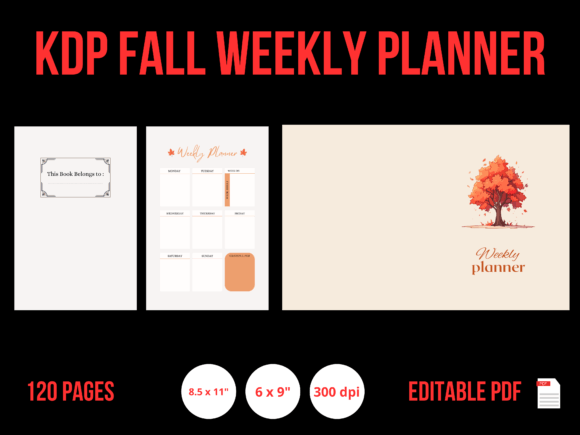
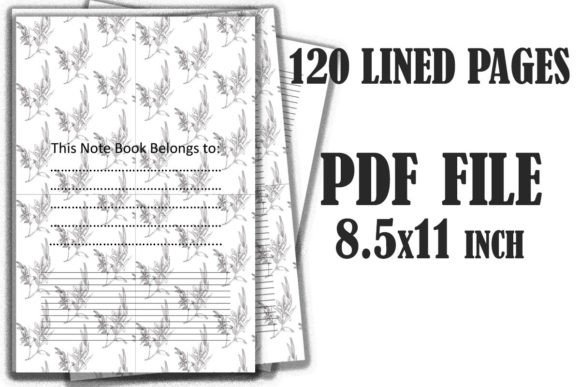
120 Printable Lined Pages is a downloadable PDF containing exactly what its name promises: 120 clean, standard-sized (8.5" × 11") lined pages—each featuring a subtle, original floral pattern background. But its value lies far beyond count or aesthetics. It’s engineered for real-world use: compatible with any inkjet or laser printer, optimized for minimal ink consumption, and structured to support sustained attention without visual fatigue. Unlike generic templates or cluttered digital notebooks, these pages offer a quiet, consistent canvas—free of distractions, yet rich in quiet inspiration.
This isn’t about rejecting technology. It’s about recognizing that not all thinking happens best on screen. Research from the University of California, Los Angeles—and reinforced by practitioners at firms like IDEO and McKinsey—shows that handwriting activates neural pathways linked to memory retention, conceptual synthesis, and creative incubation. When professionals sketch a client journey map, draft a pitch narrative, or reflect on quarterly goals, the physical act of writing slows cognition just enough to deepen insight. 120 Printable Lined Pages provides the ideal substrate for that process: structured enough to guide clarity, gentle enough to invite flow.
Fitting Into Broader Shifts—From Efficiency to Meaningful Engagement
The rise of resources like 120 Printable Lined Pages reflects deeper cultural and operational trends. First, there’s the resurgence of analog intentionality—a response to digital saturation. Tools like Notion, Obsidian, and Miro excel at organizing complexity, but they often prioritize speed over reflection. Meanwhile, professionals report increasing “cognitive switching costs”: jumping between Slack, email, docs, and dashboards fractures attention. A printed page offers a bounded, single-purpose space—a cognitive reset button.
Second, there’s the growing emphasis on design-driven productivity. In marketing, UX, and leadership roles, how information is presented directly affects how it’s received and acted upon. A floral motif may seem decorative—but in practice, it signals care, warmth, and human scale. That matters when onboarding new team members, presenting strategic frameworks to stakeholders, or guiding workshop participants through reflective exercises. The background isn’t wallpaper; it’s ambient tone-setting—subtly reinforcing values like balance, growth, and resilience.
Third, this aligns with the democratization of professional-grade tools. Ten years ago, custom-printed notebooks were expensive, slow to produce, and limited in distribution. Today, high-resolution PDFs like 120 Printable Lined Pages deliver boutique-quality design instantly—no inventory, no shipping, no compromise. Freelancers print five pages before a client call. Educators generate class sets overnight. Entrepreneurs bind custom journals for retreats—all with the same file, same fidelity, same flexibility.
Why Professionals Are Choosing Print—Strategically
It’s not that people have stopped using digital tools. It’s that they’re becoming more discerning about *where* and *when* each tool adds unique value.
- For creatives and copywriters, drafting headlines or taglines on 120 Printable Lined Pages helps bypass the “blank doc paralysis” of word processors. The floral motif softens the pressure of perfection—inviting iteration, crossing out, marginalia, and side-by-side comparisons.
- For consultants and strategists, printing a set of pages before stakeholder interviews creates a shared artifact: handwritten notes become visible, tangible evidence of listening—not just data points, but context, nuance, and empathy captured in real time.
- For founders and solopreneurs, maintaining a bound journal of weekly reflections—printed from 120 Printable Lined Pages—builds continuity across months. Flipping back to last quarter’s goals feels materially different than scrolling through fragmented Slack threads or buried Google Docs.
- For remote teams, distributing identical printed templates ahead of virtual workshops ensures alignment. Everyone starts from the same visual language—even if they’re joining from Tokyo, Lisbon, or Portland.
These aren’t edge cases. They’re emerging best practices—validated by designers at companies like Figma (who embed printable reflection sheets into their research playbooks) and learning & development teams at Fortune 500s (who now include curated printables in onboarding kits alongside digital credentials).
Design as Infrastructure—Not Decoration
The floral background in 120 Printable Lined Pages is often the first thing people notice—and the last thing they question. Yet its role is deeply functional. Unlike bold graphics or dense patterns, this motif operates at the periphery of perception: it adds texture without competing for attention. It avoids the clinical sterility of plain white paper while resisting the visual noise of clip-art or stock imagery. Psychologically, nature-inspired motifs correlate with reduced stress and increased openness—ideal conditions for brainstorming, feedback sessions, or personal development planning.
And because every page shares the same layout—consistent line spacing, generous margins, and reliable top/bottom borders—the experience scales. Whether you print one page or all 120, the rhythm remains intact. That predictability builds trust in the tool itself—freeing mental bandwidth for the work, not the format.
Meeting Evolving Expectations—Without Overpromising
Today’s professionals don’t want “all-in-one” solutions. They want modular precision: tools that do one thing exceptionally well and integrate cleanly into existing systems. 120 Printable Lined Pages succeeds here by refusing to be everything. It doesn’t sync to the cloud. It doesn’t auto-tag or search your handwriting. It doesn’t require a subscription. Instead, it delivers what it promises—reliably, beautifully, immediately.
This resonates with shifting expectations around sustainability, too. Printed pages made on demand—especially on recycled or responsibly sourced paper—offer a lower-carbon alternative to mass-produced notebooks shipped globally. And because the PDF is reusable, professionals can reprint lost pages, adjust margins for specific printers, or even adapt layouts for accessibility needs—without waiting for vendor support or version updates.
Practical Integration—No Onboarding Required
Adopting 120 Printable Lined Pages requires zero training. No software install. No account creation. Just download, print, and begin. That frictionless entry point is critical for time-constrained professionals who evaluate tools on time-to-value, not feature lists.
Consider these real-use examples:
- A freelance brand strategist prints 10 pages before every discovery call—using one for agenda, three for client quotes, two for competitive analysis, and the rest for synthesis. She scans completed pages into her digital archive post-call—blending analog depth with digital searchability.
- A marketing director distributes printed sets to her team before quarterly planning. Each person receives identical pages, pre-labeled with sections like “What’s Working,” “What’s Stalling,” and “One Bold Experiment.” The uniformity fosters psychological safety—and the floral motif subtly reinforces the company’s brand voice: thoughtful, human, forward-looking.
- An independent course creator binds 60 pages into a physical workbook companion for her online program. Students report higher completion rates—not because the content changed, but because holding, turning, and writing in a physical book created ritual and accountability.
Looking Ahead—Where Simplicity Meets Strategy
As AI accelerates content generation and automation reshapes routine tasks, the human capacity for deep attention, ethical judgment, and empathetic communication becomes *more*, not less, valuable. Tools like 120 Printable Lined Pages don’t compete with those advances—they safeguard the conditions under which they matter most.
This isn’t about returning to the past. It’s about building infrastructure for the future—one where clarity isn’t assumed, but cultivated. Where intentionality isn’t aspirational, but operationalized. Where beauty serves function, and simplicity enables sophistication.
So whether you’re refining a go-to-market plan, mentoring a junior colleague, mapping user pain points, or simply reclaiming 20 minutes of undistracted thinking—120 Printable Lined Pages offers more than paper. It offers presence. And in a world racing toward the next thing, presence may be the most strategic advantage of all.